
Friday, December 21, 2012

River Research Presentations
Last week, the students chose and researched a river using information packets and the internet. This week, they wrote and gave presentations and created posters to show their classmates.
This was their first formal presentation and they did a really great job! The posters looked great, too!
Here are the video recordings.
This was their first formal presentation and they did a really great job! The posters looked great, too!
Here are the video recordings.
Monday, December 3, 2012
Rivers, Ecosystems, and Disney, Oh My!
Here is a great video we watched in class today that shows examples of lots of our spelling words like river, rapids, bends, and waterfall.
Also, there are some great visuals of 2 ecosystems- the river and a forest. An ecosystem includes the animals, the plants, the shape of the land (hills, mountains, water), and the weather.
What parts of an ecosystem can you see?
http://www.youtube.com/watch?v=4DE5a80I8EU

Also, there are some great visuals of 2 ecosystems- the river and a forest. An ecosystem includes the animals, the plants, the shape of the land (hills, mountains, water), and the weather.
What parts of an ecosystem can you see?
http://www.youtube.com/watch?v=4DE5a80I8EU

Friday, November 30, 2012
December Newsletter
ACI 1 News
Date: December 3rd - December 21st
|
|
Special Note:
Dear parents,
We just wrapped up Matsumura’s Ice Sculpture, during which our
students became little artists of their own! They made murals as well as
collages in class in order to learn how to express themselves and collaborate
with others.
In addition, we end our math unit on time, temperature, and money.
As mentioned in the letter sent last week, we will begin having monthly in-class presentations. I
cannot stress to you enough to encourage
your child to do his/her own work. Our goal is to teach your child to
become an independent learner in
our classroom.
Thank you.
|
Science:
Unit 4: Ecosystems
Ecosystems
are important aspects of the earth’s environment. They define entire areas
and are essential for all living and non-living things!
Week 1: Introduction
* The students will learn what an ecosystem is, what it consists of,
and why it is vital for plant and animals survival
Week 2: Deserts,
Tundra
* We will be discussing desert and tundra ecosystems, the animals that
live in these areas, and how they interact with their environment
Week 3: Temperate,
Rainforest
* We will be discussing temperate and rainforests ecosystems, the
animals that live in these areas, and how they interact with their
environment
|
Math
Unit 4: Exploring
Addition and Subtraction
This month we will be
building the foundations for math by learning basic concepts of addition and
subtraction.
We will discuss number
patterns as well as children learn how to add 10 to change the second digit
in number.
We will also be working on
word problems and the students learn to turn math numbers into words to
understand stories and problems in a mathematical way.
|
English Language Arts:
Unit 4: Follow a River
This month, we will be
reading Follow a River, a look into what makes a river, where a river
goes, and how it affects the earth and life around it.
Week 1: Introduction
Topic: We
will begin the book with a walk in order to get a clear understanding of the
basic concepts covered
Week 2: Famous Rivers
Topic: We will discuss
some famous rivers in the world and their importance
Week 3: Presentation
Topic: We will be
working on our in-class presentations, creating research and writing our
speeches
|
Winter Collaboration Murals
As a final project for this unit, the students collaborated to create winter-themed murals that now proudly hang outside our classroom. I'm very impressed by their artwork as well as their ability to work together to make them! ^^


This was made by Julie, Jared, Leo, Silver, and Esther

This was made by Amy, Sophia, Sara, Eileen, Tony, and Benjamin.

Tuesday, November 27, 2012
Water Cycle Experiment
We have also been learning about the water cycle over the past month. Today, we performed an experiment demonstrating how water vapor collects to become clouds (condensation) and eventually makes rain (precipitation) when clouds can't hold anymore water.

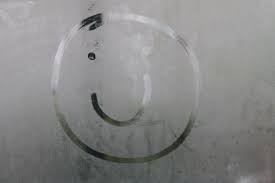
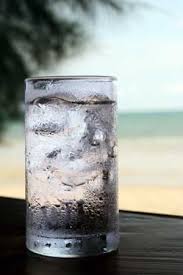

Here is a similar photo of the experiment we did in class.
We also see a similar reaction on the mirror after a hot shower or on a glass of ice water on a hot day!
Collaboration
This week, we've been learning about "collaboration"- working together as a group. Many times art, books, music, and dance are made through 2 or more people collaborating together.
Here are two videos that show how collaboration can really be great!
Here are two videos that show how collaboration can really be great!

Subscribe to:
Posts (Atom)